.png?width=1080&height=1080&name=Untitled%20design%20(46).png)


AI-powered sales funnels are changing how businesses respond to buyer behavior. As buyer journeys become less predictable, businesses need a smarter way to react to intent, timing, and engagement in real time. AI helps make that possible by improving lead quality, supporting more relevant personalization, and giving teams better direction on where to focus. In this blog, we’ll break down what that looks like and why more companies are paying attention.
The traditional sales funnel is not as well suited to today’s buyer behavior as it once was. For a long time,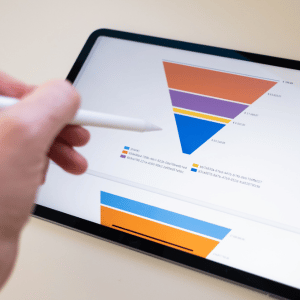 funnels have been built around a more fixed path. Marketing generates leads, sends follow-up emails, and passes prospects along based on a standard set of actions. Personalization can often be pretty minimal, and reporting focuses more on how many leads come in than on how likely those leads are to become real opportunities.
That means sales teams are spending time on leads that were never a strong fit to begin with. And marketing teams may be sending the same follow-up to people showing very different levels of interest. When the funnel isn't guided by real buyer behavior, it becomes harder to build lasting relationships with any new leads.
The challenge is that buyers are not moving through a clean, predictable journey anymore. Some are ready to engage quickly, while others spend weeks researching, revisiting pages, comparing solutions, and forming opinions before they ever respond.
That is where AI starts to change the picture.
An AI-powered sales funnel uses data, automation, and machine learning to help businesses qualify leads, personalize follow-up, and move opportunities forward with better timing. Instead of treating every lead the same, it looks at real buyer signals, like page visits, email engagement, content interest, and intent, to help teams decide what should happen next.
That can make the funnel much more responsive. If a lead keeps revisiting a service page, engages with bottom-of-funnel content, or shows stronger buying signals, AI can help flag that interest earlier. It can also help adjust messaging based on behavior, surface the next best action for sales, and guide leads into more relevant nurture paths instead of defaulting to the same sequence every time.
That might include:
At its core, an AI-powered sales funnel helps businesses make the funnel more useful on both sides. Buyers get a more relevant experience, and teams get a clearer view of who is engaged, who needs more nurture, and where to focus their time.
That value becomes even clearer when you look at the parts of the funnel where businesses tend to lose time, miss signals, or rely too heavily on assumptions. This is where AI-powered sales funnels can start to create a more noticeable edge.
One of the clearest ways an AI-powered sales funnel improves performance is through lead qualification.
A lot of businesses still qualify leads using a fairly limited mix of factors, like company size, job title, or form fills. That can be useful, but it does not always tell the full story. Someone may look like a perfect fit on paper and have very little real intent. Someone else may seem less obvious at first glance but be showing strong signs that they are ready to move.
AI helps make that process more accurate by looking at a broader set of signals and spotting patterns more quickly. Instead of relying so heavily on static information or assumptions, teams can use AI to get a clearer view of which leads are actually worth prioritizing. That might include things like repeat visits, pricing-page engagement, product-specific interest, or other behaviors that point to stronger intent.
That gives sales teams a better shot at focusing their time where it is most likely to matter.
A more informed qualification process can help answer questions like:
This is one of the strongest examples of AI's role in optimizing sales funnel performance. It helps teams move away from treating qualification like a rough estimate and toward a process that is more responsive, informed, and useful.
Personalization has been around for years, but AI is making it more useful and more scalable.
Without AI, personalization is often limited. Teams might build a few segmented email tracks, swap out some dynamic website content, and call it a day. With AI, personalization can become more responsive to actual buyer behavior and context.
Instead of relying only on broad audience segments, AI can look at signals like
That information can then shape what happens next in the funnel.
For example, a lead who keeps revisiting service pages or pricing-related content may need a different follow-up than someone who is still spending time with educational resources. A prospect engaging with content tied to a specific challenge may be better matched with messaging that speaks directly to that issue instead of being dropped into a general nurture flow.
That is where personalization starts to feel more practical. Messaging can shift based on behavior. Content recommendations can reflect actual interest. Nurture paths can adjust when a lead starts showing stronger intent. Sales outreach can also become more informed because reps have a clearer view of what a prospect has been paying attention to before the conversation even starts.
The goal is not to create a completely different experience for every lead. It is to make the next message, offer, or touchpoint feel more aligned with what the buyer has already shown interest in.
The competitive risk is not simply “other companies are using AI.” It is that other companies are building faster, more responsive systems while slower teams are still managing a manual and static funnel.
If one company can qualify leads more accurately, personalize outreach more effectively, and react to buying signals sooner, they have a real advantage. They waste less effort. They create less friction. They get good opportunities faster.
That does not mean every company needs to turn its funnel into a fully autonomous machine overnight. It does mean the baseline is changing, though. Buyers are getting used to faster responses, more relevant interactions, and smarter follow-up. Companies that stay stuck with static workflows and broad nurture tracks may find themselves outpaced by teams using AI to make better decisions earlier.
Like we said, you do not need to rebuild your entire revenue engine immediately.
A more practical way to start using ai's role in optimizing sales funnel processes is to look for friction points that are already costing time or pipeline quality. For example:
From there, AI can be introduced in a way that supports the system instead of overwhelming it. That may mean improving qualification models, using AI-assisted prospect research, layering in smarter personalization, or tightening reporting around funnel movement and buying signals.
The goal is not to use AI everywhere. The goal is to use it where it sharpens the funnel and helps teams act with more confidence.
The real value of an AI sales funnel is not the technology itself. It is the strategy that shapes how that technology is used.
The businesses pulling ahead are not just adding AI into the funnel and hoping for better results. They are using it to support a clearer strategy around lead qualification, personalization, sales follow-up, and pipeline movement. That strategy is what turns AI from a tool into an advantage.
If your team is ready to build a smarter sales funnel strategy around the way your buyers actually engage, Modern Driven Media can help. Reach out to MDM for a funnel strategy that is tailored to your business and built to support stronger growth.
A: An AI sales funnel is a sales and marketing funnel that uses AI to improve how leads are qualified, nurtured, segmented, and moved through the buying journey. Instead of relying only on fixed workflows, it responds to behavior and data in real time.
A: Traditional automation usually follows pre-set rules. AI's role in optimizing sales funnel performance is more adaptive. It can analyze patterns, predict conversion likelihood, surface better next steps, and support more personalized interactions at scale.
A: No. An AI-powered sales funnel can automate and improve parts of the process, especially early-stage qualification, personalization, and follow-up. Human reps are still essential for relationship-building, strategic conversations, and complex deals.
A: Companies are investing because AI is helping improve efficiency, personalization, and revenue outcomes in marketing and sales.